
Toolrr: Free Online Utility Platform
Tech Stack
Challenge
Existing online utility platforms suffer from intrusive ads, paywalls, privacy concerns (cloud processing), and fragmented experiences across dozens of websites. Users needed a unified, privacy-first platform offering diverse utilities through a consistent interface without registration, ads, or data collection.
Solution
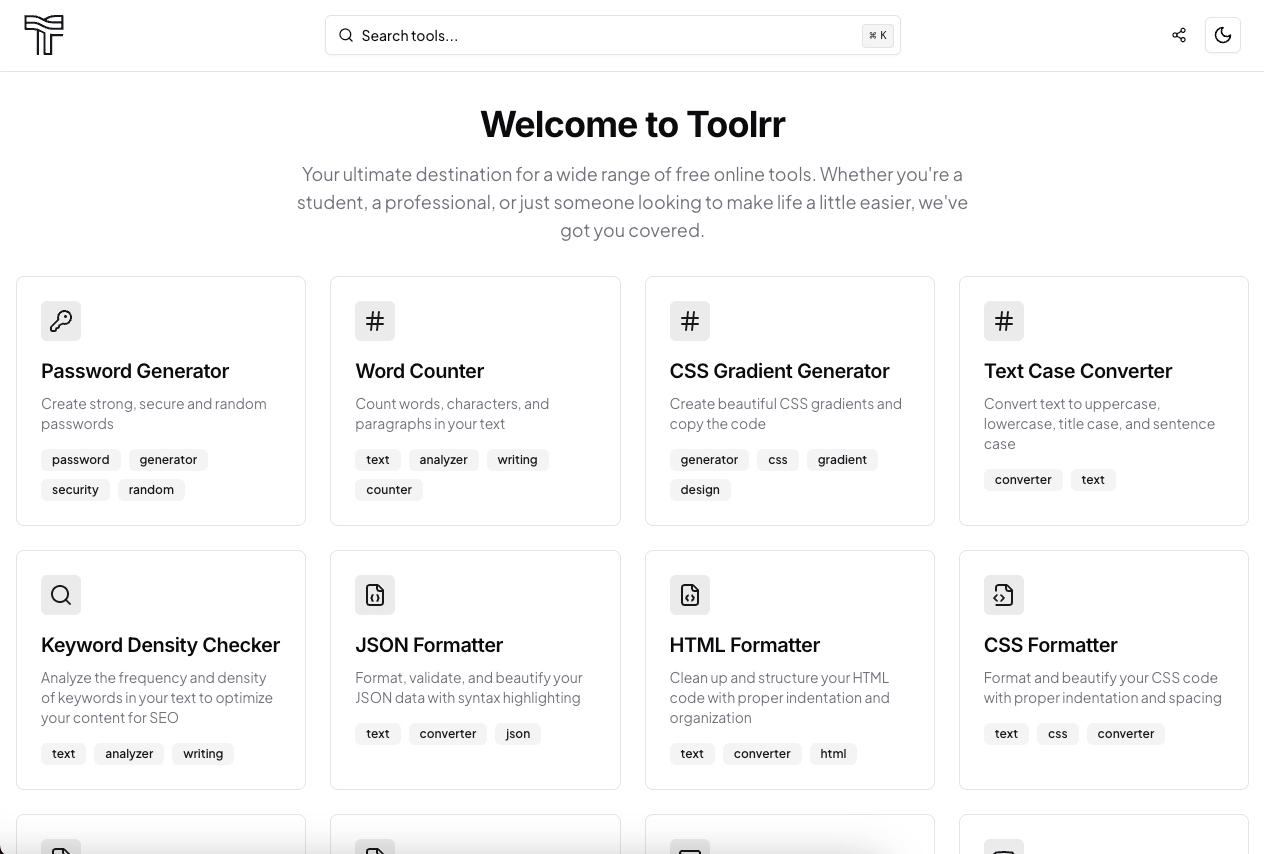
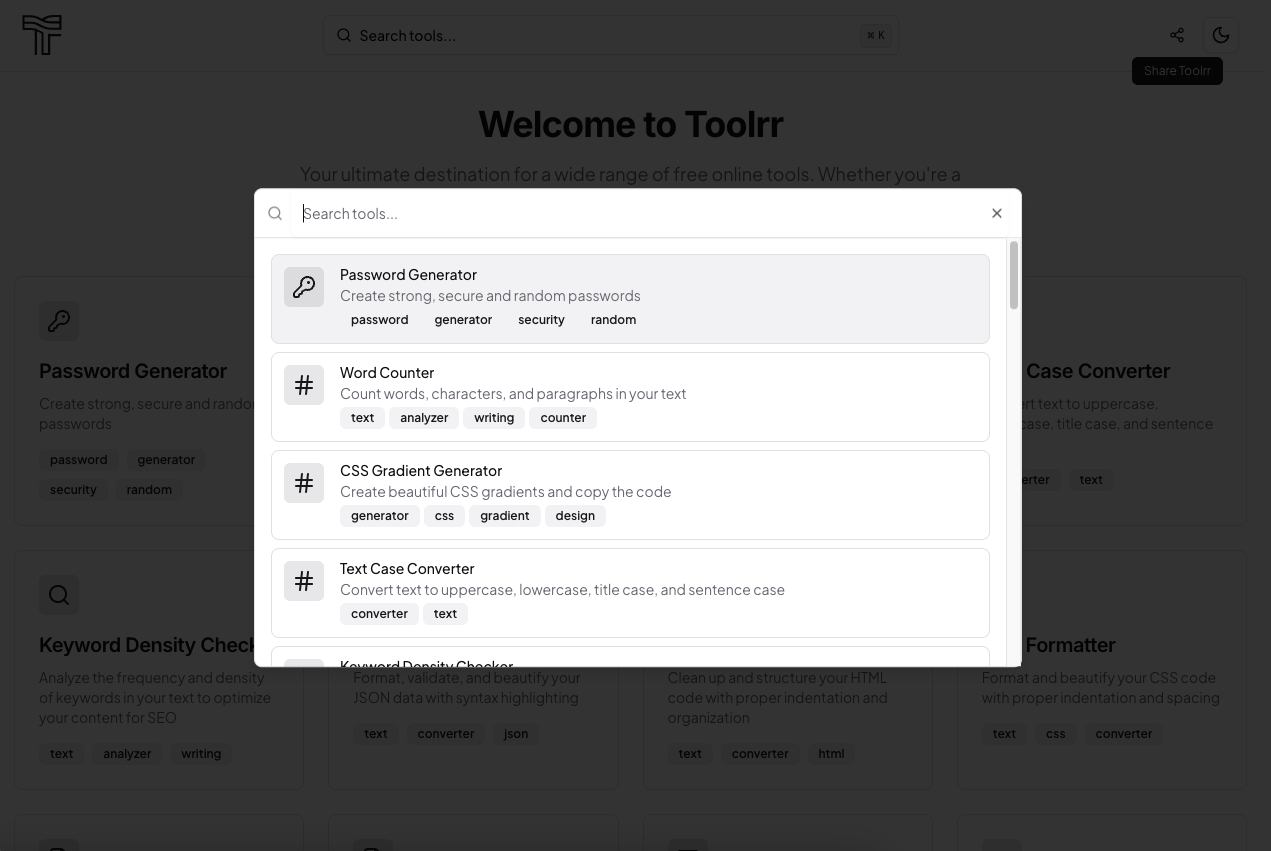
Built a browser-based utility platform with 26+ free tools, all processing locally for privacy. Zero registration, completely ad-free, with CMD+K fuzzy search and 43-tag categorization.
Tool Categories
Text & Content (6 tools)
- Password Generator with strength validation
- Word Counter with reading time estimation
- Text Case Converter (uppercase, lowercase, title, sentence case)
- Keyword Density Checker for SEO
- Lorem Ipsum Generator
- Email Extractor with deduplication
Code & Development (2 tools)
- Multi-Format Code Formatter: Monaco Editor (VS Code engine) with Prettier, syntax highlighting for JSON/HTML/CSS/XML/YAML
- URL Encoder/Decoder with batch processing
Design Utilities (2 tools)
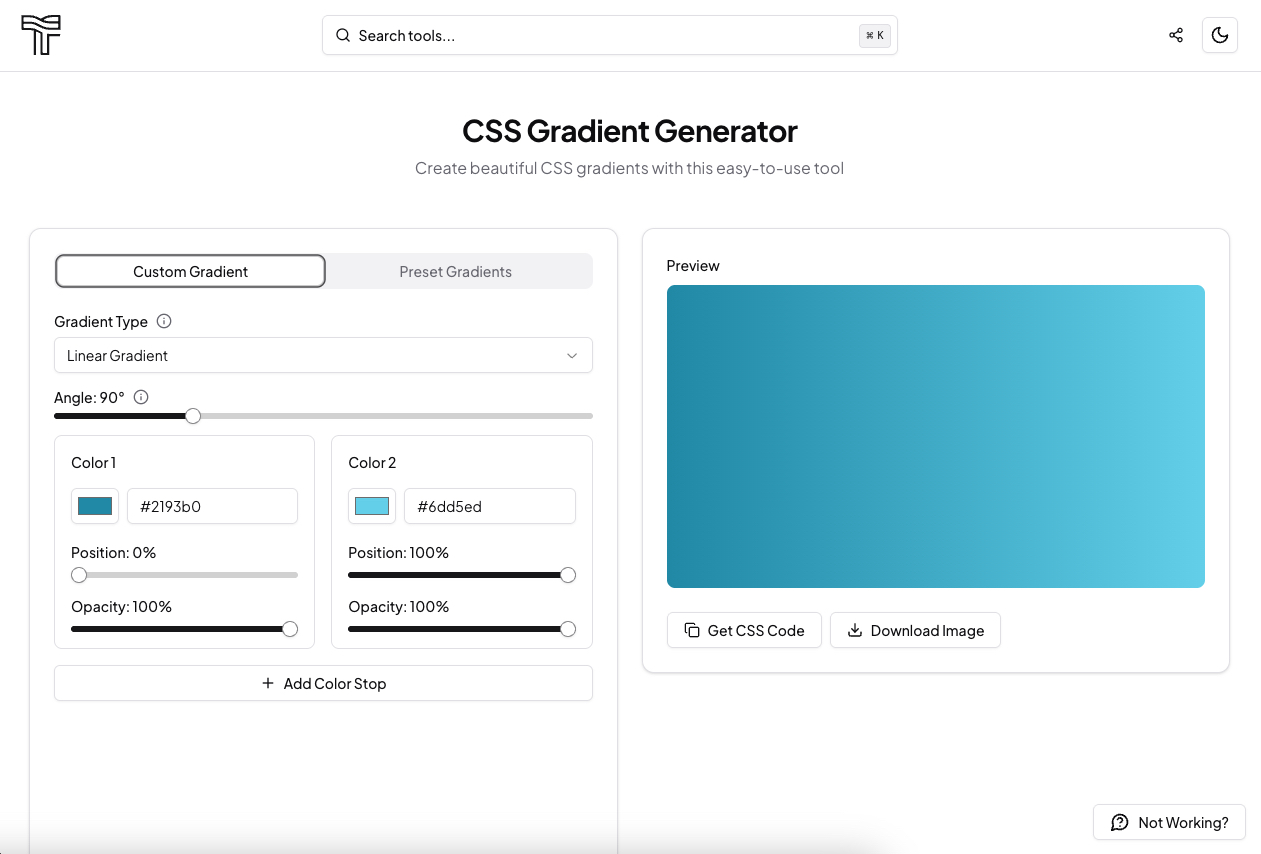
- CSS Gradient Generator with live preview
- CSS Box Shadow Generator with multiple layers
Media & Communication (3 tools)
- YouTube Thumbnail Downloader (all resolutions)
- WhatsApp Direct Message with QR codes
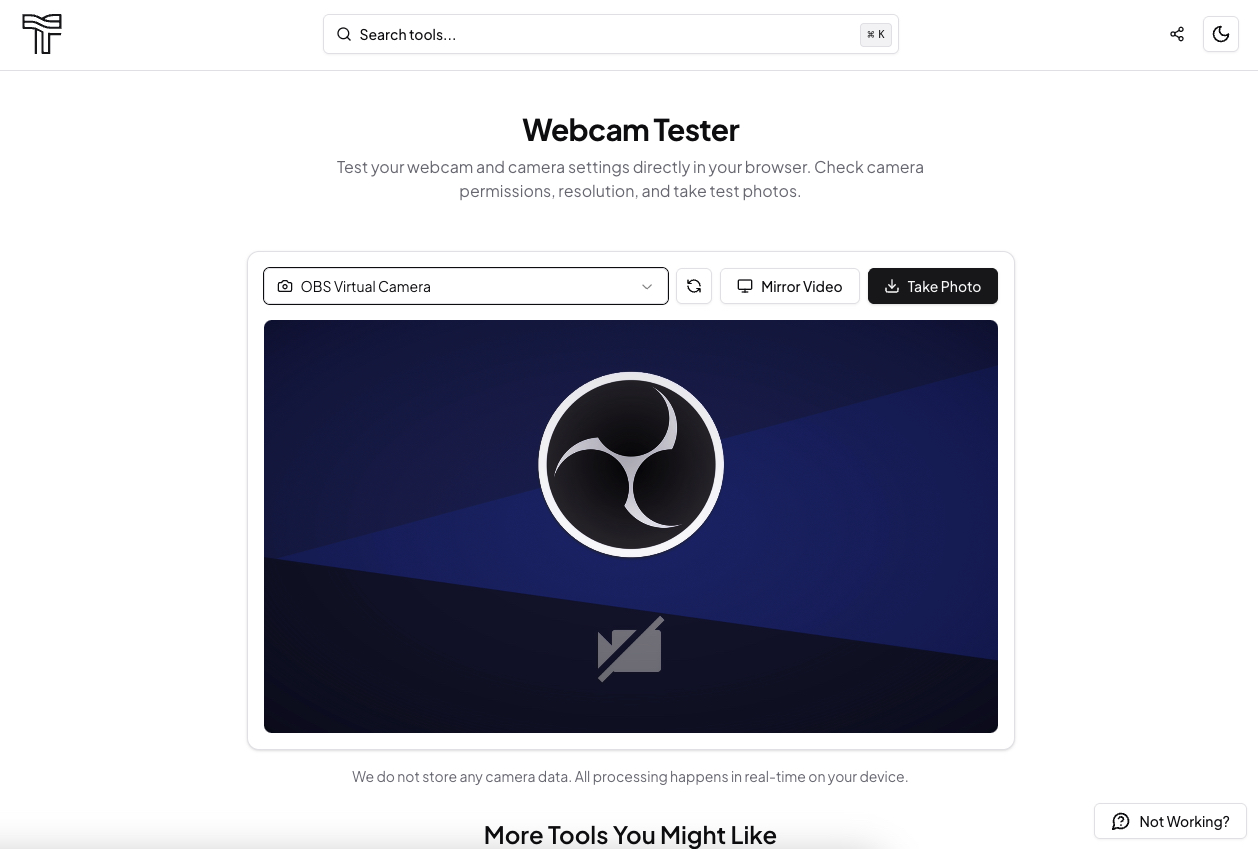
- Webcam Tester (privacy-focused, browser-only)
Time Management (3 tools)
- World Clock with multi-timezone display
- Countdown Timer with sound notifications
- Time Zone Converter with DST handling
Financial & Generators (5 tools)
- Pay Calculator with tax computations
- Fiverr Fee Calculator
- Unit Converter (length, weight, volume, temperature)
- Name Generator (Faker.js integration)
- Credit Card Generator (test purposes, Luhn algorithm)
Technical Architecture
Frontend Stack
- Next.js 15 & React 18: App Router, SSR, React Server Components, automatic code splitting, ISR
- TypeScript: Full type safety across 26+ tools, type-safe metadata system
- Shadcn/UI + Radix UI: Accessible, WCAG-compliant component library
- Tailwind CSS + Framer Motion: Responsive design, smooth animations, dark mode support
Code Editor Integration
- Monaco Editor: VS Code engine with dynamic imports (SSR-safe), Prettier formatting, Babel parsing, IntelliSense
- Syntax highlighting for JSON, HTML, CSS, XML, YAML
Performance & Security
- Browser-based processing: All computations client-side for privacy
- Web Workers: CPU-intensive tasks off main thread
- Upstash Redis: Rate limiting and abuse prevention
- Turnstile: Security verification for sensitive operations
- Core Web Vitals optimized: Lazy loading, code splitting, sub-2s initial load
Developer Tools
- Vitest + React Testing Library: Unit testing
- JSON metadata system: Easy tool addition
- Custom hooks: useToast, useClipboard for reusability
- Specialized libs: date-fns, Faker.js, libphonenumber-js, flag-icons
Results
Impact Metrics
- 26+ tools live in production at toolrr.com
- 6 major categories with 43-tag system
- Zero registration required—instant access
- 100% ad-free experience
- Sub-2s initial load time
- 24+ reusable UI components
- Privacy-first: All processing client-side
- High Lighthouse scores with Core Web Vitals optimization
Key Learnings
Scalable Architecture: JSON-based metadata system + shared component library prevented code duplication across 26+ tools. Early copy-paste approach created maintenance nightmares. Invest in abstractions upfront, not after problems emerge.
Browser Processing Trade-offs: Client-side processing for privacy required Web Workers for heavy operations (Prettier formatting). UI would freeze otherwise. Browser-based isn't free—needs optimization and progressive enhancement fallbacks.
Monaco SSR Integration: Browser-only libraries complex with Next.js SSR. Dynamic imports with ssr: false, proper useEffect cleanup, code splitting for multi-MB bundle. Documentation rarely covers SSR framework specifics.
State Management: Avoided Redux/Zustand—React's useState/useContext sufficient for isolated tool state. Custom hooks (useClipboard, useToast) provided consistency without heavyweight libraries. Start simple, add complexity only when needed.
SEO at Scale: Automated metadata generation from tool definitions. Manual per-page optimization error-prone for 26+ pages. Automatic sitemap generation critical for discoverability.
Production Abuse Prevention: Redis rate limiting essential from day one. Balancing security vs UX required careful tuning per tool. Turnstile for abuse-prone endpoints. Don't wait for problems to add protection.
Strategic Testing: Focus on shared components and critical logic, not exhaustive UI coverage. TypeScript catches many bugs. Test edge cases and algorithms—perfect coverage impractical for 26+ diverse tools.
Screenshots
Interested in similar work?
Looking to build something like this? Let's discuss how I can help bring your project to life.
Get in touch